How Does an Air Source Heat Pump Work? The Complete Explanation
Last reviewed: 13 May 2026
The actual mechanism by which a heat pump extracts heat from cold outdoor air and delivers it to your radiators — and why it can deliver three to four units of heat for every one unit of electricity it uses.
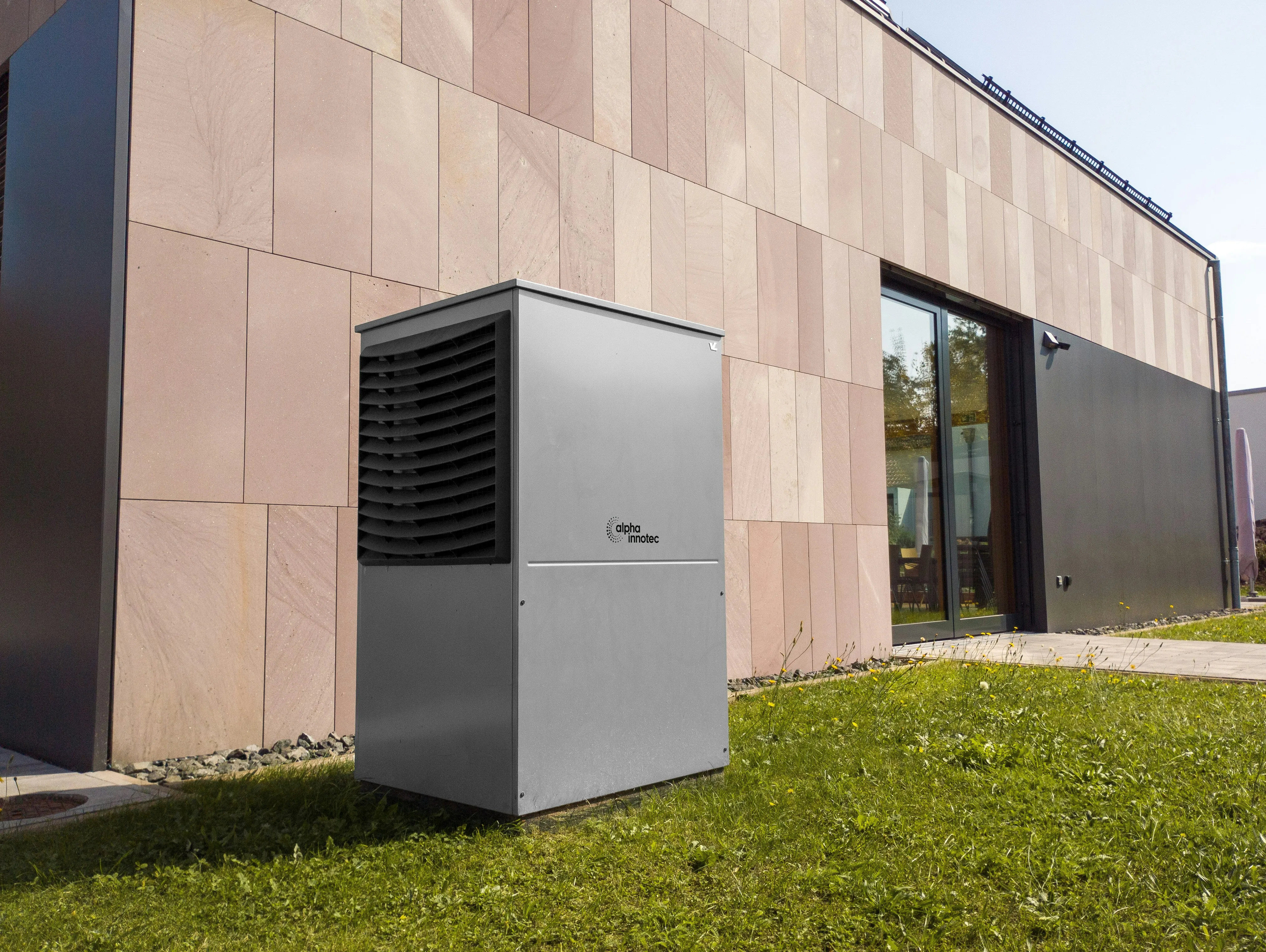
In short
An air source heat pump is a refrigerator running in reverse. It uses electricity to move heat from cold outside air into your home’s heating water, rather than burning fuel to generate heat. A typical UK installation delivers around 3 to 4 units of heat for every 1 unit of electricity used — meaning a properly-sized, well-installed heat pump can heat a Reading home for materially less electricity input than the heat it puts out. The mechanism is the same one your kitchen fridge uses; the direction is simply inverted.
On this page
- The headline mechanism, in one paragraph
- The refrigerant cycle — what’s actually happening
- The four components doing the work
- Why it can deliver more heat than electricity used
- Typical UK efficiency figures
- It’s basically a fridge running backwards
- Will it work when it’s cold outside?
- What about the refrigerant inside?
- What this means for choosing and installing one
- What this means for homes in Reading
The headline mechanism, in one paragraph
A heat pump doesn’t make heat — it moves heat. There is heat energy in outdoor air even when the air feels cold to you (any air above absolute zero, which is −273°C, contains heat). A heat pump captures that ambient heat, concentrates it through compression, and delivers it into your heating water. The electricity it consumes pays for the moving and concentrating, not for the heat itself. Because moving heat takes much less energy than generating it from a fuel, the heat delivered is several times larger than the electricity used.
That’s the whole concept. The rest of this article explains exactly how the cycle works, what the four components do, and what the real-world UK efficiency figures look like.
The refrigerant cycle — what’s actually happening
Inside every heat pump there’s a sealed loop of pipework carrying a liquid called a refrigerant. The refrigerant is engineered to boil and condense at temperatures and pressures the system can control. It changes between liquid and gas continuously as it travels around the loop, and each change of state moves heat from one place to another.
The cycle has four stages:
1. Evaporation (outdoors). The refrigerant arrives at the outdoor unit as a cold, low-pressure liquid. It’s actually colder than the outside air — typically 5–8°C below ambient. Because heat always flows from warmer to colder, heat from the outdoor air flows into the refrigerant. The refrigerant absorbs that heat and boils, becoming a low-pressure gas. The outdoor air, having given up some heat, leaves the unit slightly cooler.
2. Compression. The low-pressure gas is drawn into the compressor, which is essentially an electric pump. The compressor squeezes the gas into a much smaller volume, raising both its pressure and its temperature dramatically. The refrigerant exits the compressor as a hot, high-pressure gas — typically at 70–90°C or higher, depending on the system. This is the only stage where the heat pump actively consumes meaningful electricity.
3. Condensation (indoors). The hot gas flows into the indoor heat exchanger, where it meets the cooler water in your heating circuit. Because the gas is hotter than the water, heat flows from the gas into the water. As the gas loses heat, it condenses back into a high-pressure liquid. The heating water, now warmer, flows on to your radiators, underfloor pipes, and hot water cylinder. The water leaves the heat pump at the system’s design flow temperature — typically between 35°C and 55°C.
4. Expansion. The high-pressure liquid passes through an expansion valve, which drops its pressure sharply. The pressure drop cools the refrigerant back to its starting state — cold, low-pressure liquid. It returns to the outdoor evaporator and the cycle starts again.
The whole thing is closed-loop and continuous. There’s no combustion, no flue, no chimney. The only inputs are electricity (to the compressor and a fan) and the outdoor air. The only outputs are heat (into your heating system) and slightly cooler air returning to the outdoors.
The four components doing the work
Strip away the casing, the controls, and the plumbing, and the entire heat-pump mechanism comes down to four components:
| Component | What it does |
|---|---|
| Evaporator | The outdoor coil. Absorbs heat from outdoor air by boiling the refrigerant. A fan draws air across it to maximise heat transfer. |
| Compressor | The electric pump. Compresses the gas, raising its pressure and temperature so it’s hot enough to deliver useful heat. This is the part that consumes most of the electricity. |
| Condenser | The indoor heat exchanger. Transfers refrigerant heat into your heating water. |
| Expansion valve | Drops refrigerant pressure to reset the cycle. |
These four — plus the refrigerant that circulates between them — are the heart of the system. Everything else (the outdoor fan, the indoor circulation pump, the controls board, the hot water cylinder, the radiators) supports the core cycle but isn’t part of it.
The difference between a monobloc heat pump and a split-system heat pump comes down to which components sit outdoors and which sit indoors. In a monobloc, all four components (and the refrigerant) sit inside the outdoor unit, and what flows into your house is heated water through insulated pipework. In a split system, the compressor sits outdoors but the condenser sits indoors, and refrigerant runs between them through copper pipework. Most UK retrofit installs are monobloc because they’re simpler to install and require no specialist refrigerant handling on site. Our guide on monobloc vs split-system covers the trade-offs in detail.
Why it can deliver more heat than electricity used
This is where most explanations either get hand-wavy or go fully into thermodynamics textbook mode. Neither is satisfying. The honest, plain-language answer is this:
A gas boiler converts chemical energy in fuel into heat. The maximum amount of heat it can ever produce is 100% of the energy in the fuel — real boilers reach about 90% because some heat is lost to flue gases. The framing is energy in (gas) producing energy out (heat), with losses making the output smaller than the input.
A heat pump doesn’t convert energy at all. It uses electricity to move heat that’s already in the outdoor air — heat the system didn’t have to generate. The electricity pays for the work of moving and concentrating. Because moving heat is much less energy-intensive than generating it from a fuel, the heat moved is many times larger than the electricity used.
So when you see a heat pump described as being “300% efficient” or “400% efficient,” that’s not a thermodynamic miracle — it’s the wrong framing being applied. The number is the Coefficient of Performance, or COP: heat output divided by electricity input. A COP of 3 means 3 kWh of heat delivered for every 1 kWh of electricity consumed. It’s not efficiency in the same sense as boiler efficiency; it’s a ratio of two different things.
The metric that gets quoted on heat-pump product literature in the UK is the Seasonal Coefficient of Performance (SCOP) — the average COP across a typical UK heating season, weighted by realistic outdoor temperature distributions. It’s the number that matters for predicting your running costs.
Typical UK efficiency figures
The numbers that actually appear in the UK market:
- The minimum SCOP for a heat pump to qualify for the BUS grant is 2.8. This is set by MCS, the certification body. Any installation routed through the £7,500 BUS grant has at least this efficiency rating on paper.
- The average measured SCOP across 252 monitored UK installs was 3.87 in early 2026 (HeatpumpMonitor.org, with billing-grade metering). The best-performing model in that sample (Viessmann Vitocal 150-A) averaged 3.96 in real installations.
- Premium models advertise SCOPs of 4.5–5.3. This is the high end of the current UK market — usually R290-refrigerant systems designed for retrofit at moderate to high flow temperatures.
- The theoretical maximum (Carnot limit) for a heat pump moving heat from 5°C outdoor air to 50°C heating water is about COP 6. Real-world heat pumps achieve roughly 40–60% of this theoretical maximum.
What moves a specific installation up or down within this range:
- Flow temperature. The cooler the water your heat pump needs to produce, the better it performs. A system designed to deliver 35°C water (typically for underfloor heating) is much more efficient than a system pushing 55°C (typical for retrofitted radiators). Lower is better, which is why most retrofit work focuses on enabling lower flow temperatures.
- System sizing. A heat pump matched to your property’s actual heat-loss demand performs better than one that’s too big or too small. Oversized systems short-cycle (start and stop repeatedly), which is inefficient. Undersized systems run hard constantly and lean on backup electric heating.
- Install quality. Refrigerant charge, controls commissioning, and pipework details each affect SCOP by a few percent. They add up.
- Tariff. This doesn’t change the SCOP itself, but it changes the running cost — a heat-pump-specific tariff makes the cost-per-kWh of electricity used much lower during the hours the heat pump typically runs.
For a deeper look at what SCOP really means and how to use it in comparing systems, see our SCOP and COP guide.
It’s basically a fridge running backwards
The single most useful mental model for understanding a heat pump is this: it’s a refrigerator running in the opposite direction.
A fridge takes heat from inside its insulated compartment (where the food is) and dumps it into your kitchen. That’s why the back of the fridge feels warm when it’s been running — that warmth is the heat being moved out of the fridge interior. The food inside gets colder because heat is leaving it; your kitchen gets very slightly warmer because heat is arriving in it.
A heat pump does exactly the same thing in the opposite direction. It takes heat from outside your house (where the air is) and delivers it into your heating water. The outdoor air leaves the unit very slightly cooler; your heating system gets warmer because heat is arriving in it.
A fridge doesn’t violate thermodynamics, and neither does a heat pump. Both use a small amount of electrical work to move heat from a colder place to a warmer place. The work pays for the movement, not for the heat.
There’s one quirk this analogy makes intuitive. You may have noticed frost building up on the back of an old freezer — the cold surface meets warmer, more humid air, and ice forms. The same thing happens on a heat pump’s outdoor evaporator coil in cool, damp UK winter conditions. The heat pump handles this by briefly reversing its cycle to send hot refrigerant through the evaporator and melt the frost off. It’s called a defrost cycle, it happens automatically, and it’s not a fault — it’s the system working correctly. Our guide on heat pump defrost cycles covers it in detail.
Will it work when it’s cold outside?
Yes — and this is one of the most common misconceptions about heat pumps in the UK market.
Modern air source heat pumps in the UK are rated to keep operating at outdoor temperatures between -10°C and -25°C depending on model. Mid-market systems typically work down to -15°C or -20°C; premium models reach -25°C, and a small number of cold-climate-rated models go to -28°C.
Reading’s coldest typical winter design temperature is around -3.4°C (per CIBSE’s UK design data), and the genuinely cold spells where outdoor temperatures sit below freezing for sustained periods last hours or a day or two, not weeks. UK conditions are nowhere near a heat pump’s design minimum for the great majority of the heating season.
What does change with outdoor temperature is the heat pump’s efficiency — not whether it works. The wider the gap between outdoor air temperature and the flow temperature the system needs to deliver, the harder the compressor works, and the lower the COP. At +7°C ambient with a 50°C flow target, a typical heat pump might deliver a COP around 3.5–4; at -5°C ambient with the same flow target, COP might drop closer to 2.5. The seasonal average (SCOP) blends these conditions weighted by how often they actually occur — and in the UK, most heating hours happen at mild outdoor temperatures, not extreme cold.
If outdoor temperature ever drops below the heat pump’s design minimum, most systems have a backup electric resistance heater that takes over. The system keeps delivering heat, but at a COP near 1 (because the resistance heater is no better than direct electric). A properly-sized heat pump in a UK home should almost never need to engage backup heating. Regular backup-heater use is a sign of an undersized or misconfigured system, not a sign that “heat pumps don’t work in cold weather.”
What about the refrigerant inside?
The refrigerant a heat pump uses matters for two reasons: how high a flow temperature the system can deliver efficiently, and how the equipment fits into the longer-term direction of UK and EU climate regulation.
Two refrigerants dominate the current UK market:
- R32. The most common refrigerant in UK heat pumps installed today. Performs well at low-to-moderate flow temperatures (35–50°C). Global Warming Potential (GWP) of 675. The EU has banned R32 in new split heat pumps of 12 kW or smaller from January 2027 because of its GWP; the UK has not yet legislated to match that timeline, but manufacturers are converging on R290 across their European product range and UK availability will reflect that.
- R290 (propane). GWP of just 3 — effectively zero from a climate perspective. Captured 38% of new EU residential heat pump certifications in 2024, up from 3% in 2021 — a market shift that’s accelerating. R290 systems can deliver higher flow temperatures (up to 70–75°C in current models), which makes them well-suited to retrofitting period properties with existing high-temperature radiators. The trade-off: R290 is propane, which is flammable, so installations are restricted to outdoor locations with minimum clearances from windows, doors, drains, and neighbouring properties.
For a Reading homeowner specifying a new install today, R290 systems are generally the safer long-term choice — particularly for properties needing higher flow temperatures and where the outdoor unit can be sited with the necessary clearances. R32 systems remain fully MCS-approved and well-supported; they’re a reasonable choice for properties where lower flow temperatures are achievable and where R290 siting clearances are tight.
For a detailed look at refrigerants, see our refrigerants guide.
What this means for choosing and installing one
Three things flow out of the physics that have practical implications for how a heat pump should be installed in your home:
- Lower flow temperature → better performance. A heat pump connected to underfloor heating (35°C flow) outperforms the same heat pump connected to small, retrofitted radiators (55°C flow). Most of the work in a typical Reading retrofit goes into making the existing radiators work at a flow temperature the heat pump can deliver efficiently — sometimes that means larger replacement radiators, sometimes it means the existing ones are already good enough.
- Correct sizing matters. A heat pump sized to your property’s actual heat loss — calculated from a proper room-by-room survey — performs better than one chosen by rule-of-thumb or by replacing the kW of your old gas boiler one-for-one (gas boilers are typically oversized).
- Install quality is part of the efficiency. Refrigerant charge accuracy, refrigerant pipe lengths (in split systems), controls commissioning, and circulation pump sizing each affect SCOP. A heat pump quote that doesn’t include detailed survey work and proper commissioning is likely to leave several SCOP points on the table.
The headline implication for buyers: a quote that promises a particular SCOP without doing the heat-loss survey, the radiator assessment, and the system-sizing work is making a claim it cannot back up. The mechanism by which a heat pump beats a gas boiler on efficiency is real and well-understood. The amount by which any specific installation will beat a gas boiler is determined by the design and install quality, not by the technology category alone.
What this means for homes in Reading
Reading’s housing stock divides roughly into three groups for the purpose of how well a heat pump tends to land:
Modern estates in Lower Earley, Woodley, and the western expansion areas — built to early-2000s insulation standards or later — typically have insulation that lets a heat pump run at lower flow temperatures and existing radiators that often need little or no upgrade. These are the easiest installs, and where heat pumps tend to land closest to their best-case efficiency.
Inter-war semis in Tilehurst, Earley, Whitley, and parts of Caversham — three-bed semi-detached homes built between the wars — are the typical case. Insulation varies (cavity-wall and loft insulation are usually retrofittable where not already present), and radiators may need upgrading on some rooms but rarely the whole system. Heat pumps in these properties generally perform at the middle of the published SCOP range when designed well.
Period properties — Victorian and Edwardian terraces in central Reading and lower Caversham — present the most design work. Solid walls limit insulation retrofit options; existing radiators were sized for a gas boiler’s 70°C flow and may need replacement to deliver the same heat at a heat pump’s 45–55°C. These are the installations where R290 systems and careful design pay off — they can deliver the higher flow temperatures these homes need without losing too much efficiency.
Reading’s coldest winter design temperature is around -3.4°C, comfortably within every current heat pump’s operating envelope. Cold weather isn’t a meaningful concern for whether a heat pump will work in a Reading home; design and install quality are what determine whether it works well.
The relevant takeaway for homeowners thinking about installation: the physics is settled and well-understood, and modern heat pumps in the UK market are mature, MCS-certified equipment with proven performance data behind them. What varies between one Reading install and another is the design work that translates the technology into a system fitted to your specific property. Our free survey is the work that turns the headline SCOP figures into a realistic projection for your home.
See what a heat pump would look like in your Reading home
The mechanism is the same in every UK home; the design is specific to yours. Our team carries out a free in-home survey including a full room-by-room heat-loss calculation, identifies the system size and configuration that fits your property, and provides a written quote with the £7,500 BUS grant already deducted.
You'll see the actual figure you'd pay — not an estimate — and the projected efficiency for your specific install.