Monobloc vs split-system heat pumps — which is right for your home?
Last reviewed: 14 May 2026
For most UK homes, the answer is monobloc — simpler install, no F-gas-certified engineer needed, no mandatory annual inspection. But a split system is the right call in specific cases, and the choice deserves a deliberate decision rather than a default.
Last reviewed: 14 May 2026.
In short
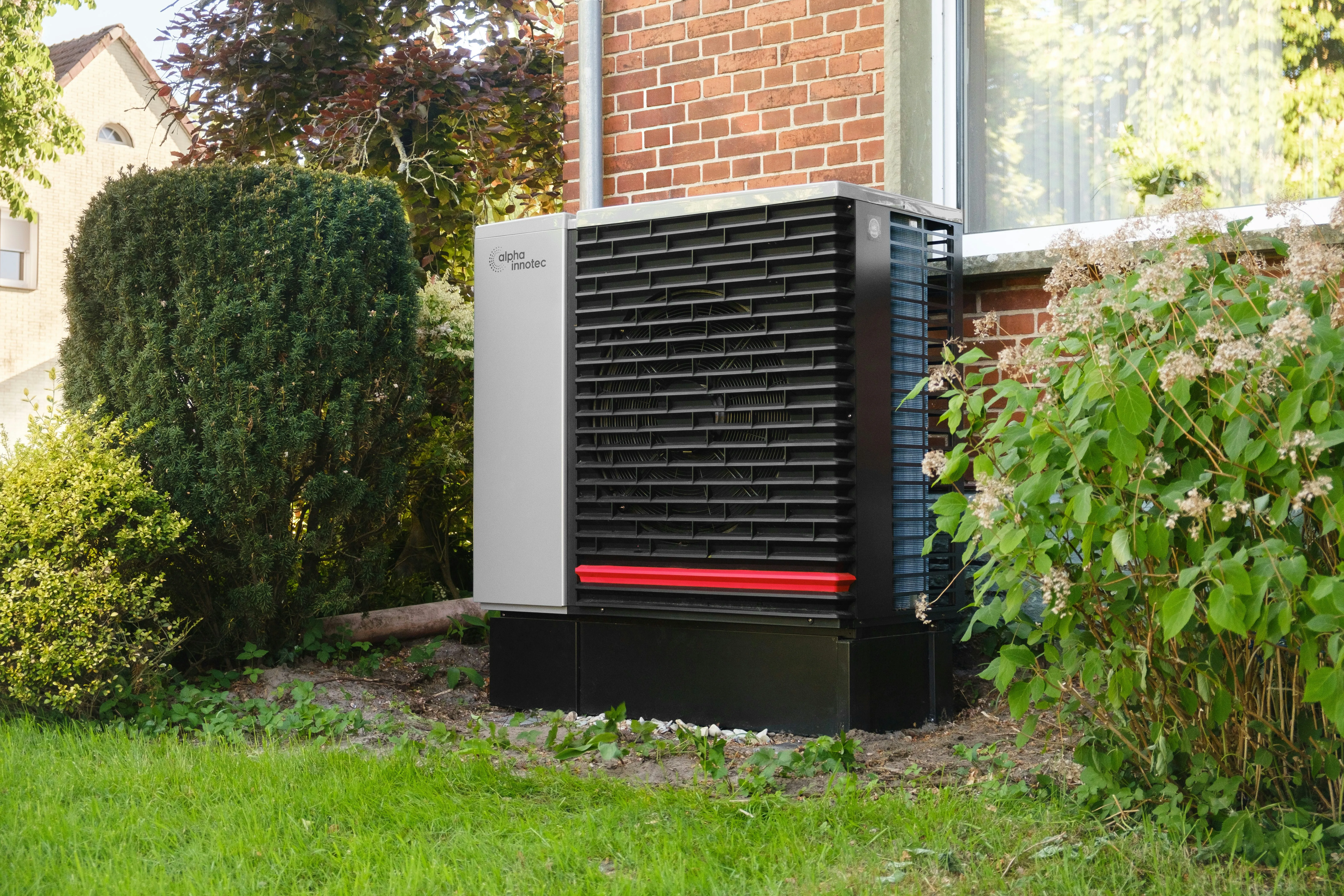
A monobloc heat pump puts the entire refrigerant circuit in a single outdoor unit; insulated water pipes carry heat into your home. A split system divides the circuit between an outdoor unit and an indoor hydraulic module, with refrigerant pipes between them. Monobloc accounts for around 80% of UK residential installs because it’s simpler to fit, doesn’t require an F-gas-certified installer, costs less, and avoids the mandatory annual refrigerant leak inspection that split systems carry. Split systems retain a niche — particularly where outdoor pipe runs are long, where indoor space exists for the hydraulic module, where the outdoor unit needs to be physically smaller for siting reasons (listed buildings, conservation areas), or where the freeze-risk profile of outdoor water pipes is uncomfortable. Air-to-air heat pumps are inherently split systems (the refrigerant goes to indoor air handlers); the monobloc-vs-split question only applies to air-to-water systems — the £7,500 BUS-grant category that covers most UK retrofits.
On this page
- The two configurations — what’s actually different
- Why monobloc dominates UK installs
- Where a split system is the better choice
- F-gas certification — the regulatory layer
- Freeze protection — the monobloc consideration
- Air-to-air vs air-to-water — a different question
- What this means for homes in Reading
- Related guides
The two configurations — what’s actually different
Monobloc. A single outdoor unit containing the entire refrigerant circuit — compressor, evaporator, condenser, expansion valve, refrigerant. The unit’s output is hot water. Insulated pipes carry that hot water (flow + return) into your home, where it feeds your radiators, underfloor heating, and hot water cylinder. The connection looks much like the way a gas boiler connects to your existing heating system — but the heat source is outside.
Split system. Two units. The outdoor unit holds the compressor, evaporator, and expansion valve. The indoor unit — usually called the hydraulic module or hydrobox, often the size of a small wall-mounted boiler — holds the condenser and circulator. Refrigerant pipes run between the outdoor and indoor units (smaller-diameter copper, typically 10-19mm). The indoor module then connects to your home’s water heating system in the same way a monobloc does.
Both produce the same end result — heated water for radiators and the hot water cylinder. The differences sit in what happens at the boundary between outdoor and indoor: water in pipes (monobloc) vs refrigerant in pipes (split).
Our explainer on how heat pumps work covers the underlying refrigerant cycle that both configurations use.
Why monobloc dominates UK installs
Around 80% of UK residential heat pump installations are monobloc. Five practical drivers:
No F-gas-certified installer needed. A monobloc’s refrigerant circuit is factory-sealed and never opened during installation — the installer connects water pipes, the same trade skill as connecting a gas boiler. Split systems require F-gas certification because the installer has to braze refrigerant lines, pressure-test them, vacuum-charge the system, and verify there are no leaks.
Faster, simpler install. A typical monobloc install is a 1-3 day operation; a split system install for the same property usually takes 2-4 days because the refrigerant work adds a full day of brazing, pressure testing, and vacuum charging.
Lower install cost. The differential is typically £1,000-£3,000 for a comparable property — driven by the labour saving and the wider installer pool.
Wider installer pool. Roughly 90% of MCS-certified heat pump installers can fit monoblocs. The F-gas-certified subset who can fit split systems is materially smaller, which affects both how many quotes you can compare and how long the lead times are.
No mandatory annual leak inspection. Most split systems exceed the refrigerant-charge threshold that triggers a mandatory annual F-gas leak inspection — £60-£150 a year, every year, for the life of the system. Monoblocs are exempt — the hermetically-sealed circuit qualifies for the residential exemption.
Where a split system is the better choice
Split systems aren’t obsolete; they keep specific advantages in specific cases:
No freeze risk on outdoor pipework. This is the biggest engineering advantage. A monobloc has water pipes running between the outdoor unit and your indoor system. In a UK winter — Reading’s design external temperature is −3.0°C — there’s a real risk of those pipes freezing if the unit stops running for any reason (a power cut, a fault, a thermostat anomaly). Monoblocs handle this through glycol antifreeze, anti-freeze valves, and built-in self-protection — but the risk exists. A split system has no outdoor water pipes; refrigerant doesn’t freeze in any realistic UK temperature.
Smaller outdoor unit. A split system’s outdoor unit can be physically smaller than a monobloc because the condenser and circulator are inside. For Reading conservation-area properties, listed buildings, narrow side-returns, or other siting-constrained installs, the smaller outdoor footprint can be the difference between planning approval and refusal.
More flexible pipe routing. Refrigerant pipes are physically smaller than insulated water pipes (10-19mm vs 22-28mm). Where the outdoor-to-indoor run is long or routes through tight spaces — period-property fabric, listed-building constraints, complex internal layouts — split systems offer more routing flexibility.
Easier indoor service access. The indoor hydraulic module makes service work — pump replacement, expansion vessel re-pressurisation, valve maintenance — easier than working inside an outdoor monobloc enclosure in winter weather.
The case against: F-gas requirement narrows your installer pool, the install costs more, the annual leak inspection is ongoing. For most UK retrofits, those install-side considerations outweigh the on-paper engineering advantages.
F-gas certification — the regulatory layer
F-gas (fluorinated greenhouse gas) regulation governs refrigerants used in heat pumps. The UK retained the EU F-gas Regulation (517/2014) after Brexit; subsequent UK-specific revisions are in consultation.
For homeowners, the regime is mostly invisible — your installer handles compliance. But the monobloc-vs-split choice affects you at two practical points:
Choice of installer. For a monobloc, any MCS-certified heat pump installer can fit it. For a split system, you need an installer with F-gas Category 2 certification (covers systems up to 3kg of refrigerant, or 6kg if hermetically sealed — covers all UK residential split systems). The smaller F-gas-certified installer pool means fewer quotes and potentially longer lead times.
Annual leak inspection. Most split systems trigger mandatory annual leak inspection by an F-gas-certified engineer — typically £60-£150 a year on top of any normal annual service. Most monoblocs are exempt because the hermetically-sealed circuit qualifies for the residential exemption.
Over a 15-year asset life, the leak-inspection cost differential is £900-£2,250 — enough to take into account when comparing system options.
Freeze protection — the monobloc consideration
The monobloc’s outdoor water pipes are the engineering risk in cold weather. Three mitigation approaches, used together for belt-and-braces protection:
Glycol antifreeze. A 25% propylene glycol mix (the food-safe version — ethylene glycol is poisonous and not used in domestic heating) protects to roughly −10°C. The cost: roughly a 10% reduction in the working fluid’s heat-carrying capacity, which translates into slightly larger pumps and a small SCOP penalty (typically 0.05-0.1 lower SCOP). Glycol degrades over time and is checked at annual service.
Anti-freeze valves. Mechanical valves that dump water from the outdoor pipework when temperature drops below a setpoint (typically +3°C). The water is sacrificed but the pipework is protected. Used as backup, not primary protection.
Built-in self-protection. Modern monobloc units run their pumps and produce a small amount of heat when ambient temperatures approach freezing, typically maintaining a 10-20°C minimum water temperature regardless of demand. This protects in normal operation but not in a power cut.
Modern best-practice combines all three: glycol at 15-20% (lower than maximum to minimise capacity penalty), anti-freeze valves as backup, built-in self-protection as the primary defence in normal operation.
For Reading-area installs, the freeze-protection picture is mild relative to northern England or Scotland. Reading’s −3.0°C design external temperature sits comfortably within the operating envelope of any properly-protected monobloc. Our heat loss survey guide covers where the design external temperature comes from and how it shapes the install.
Air-to-air vs air-to-water — a different question
The monobloc-vs-split choice sits inside the air-to-water category — heat pumps that produce hot water to feed radiators, underfloor heating, and a hot water cylinder. Air-to-water systems can be monobloc OR split.
Air-to-air heat pumps are a different category. The refrigerant goes directly to indoor heat exchangers — fan-coil units, usually wall-mounted or ceiling-cassette — where it heats or cools room air directly. There’s no water loop, no radiators, no hot water cylinder for domestic hot water (which comes from a separate appliance). Air-to-air systems are inherently split designs — by physics, the refrigerant has to run from the outdoor unit to indoor air handlers.
The April 2026 BUS amendment added air-to-air as a new grant category at £2,500 (vs £7,500 for air-to-water — see our BUS grant guide for the technology-by-technology breakdown). The lower grant reflects that air-to-air systems generally cost less to install, typically serve only space heating rather than DHW, and have lower seasonal performance for whole-home heating in the UK climate.
For most UK retrofits — replacing an existing gas/oil/LPG boiler that heated radiators and a hot water cylinder — air-to-water is the natural fit because the existing infrastructure is already in place. Air-to-air becomes interesting for: small properties without wet-heating infrastructure, single-zone heating use cases (a converted garage, a home office), additional cooling capability (air-to-air doubles as air conditioning in summer), or properties where retrofitting wet heating is prohibitively expensive.
If you’re considering air-to-water (the dominant case for Reading retrofits), the monobloc-vs-split choice is real. If you’re considering air-to-air, the system is split by definition — the question doesn’t arise.
What this means for homes in Reading
The Reading housing-stock distribution, combined with the area’s mild winters, means monobloc dominates Reading installs more strongly than the national 80% share:
Central Reading and lower Caversham — Victorian and Edwardian terraces. Outdoor-unit siting is the main design constraint. Both monobloc and split units typically go on the side return or rear courtyard. Conservation-area properties may benefit from a split system’s smaller outdoor unit when planning consent is tight; otherwise monobloc is the standard choice.
Tilehurst, Earley, Whitley, Woodley — inter-war and post-war semis. Standard monobloc installs; outdoor unit on side return or rear garden. Plenty of installer choice in the monobloc pool.
Lower Earley, Woodley, modern southern and western estates — newer construction. Monobloc remains the dominant choice. Some properties have garage and utility-room layouts that accommodate a hydraulic module if a split makes sense for other reasons (long outdoor run, particularly cold-exposed site).
Caversham Heights, Caversham Park, central conservation areas — listed-property and conservation-area constraints. A split system’s smaller outdoor footprint can ease planning approval; the F-gas-certified-installer constraint narrows the contractor pool. The trade-off is real, and worth a deliberate decision rather than a default.
For most Reading retrofits, monobloc is the recommendation. We size and quote both options where the property characteristics make the choice non-obvious — and we use the heat-loss survey to determine the right unit size before settling on monobloc vs split as a configuration question.
Related guides
- How does an air source heat pump work? The complete explanation — the underlying refrigerant physics both configurations use
- Heat loss surveys for heat pumps — what they are, what to expect — the design exercise that informs configuration choice
- The complete heat pump installation process — where the configuration choice affects install timing
- The £7,500 Boiler Upgrade Scheme grant — including air-to-air (£2,500) vs air-to-water (£7,500) grant differences
Not sure whether monobloc or split is right for your Reading property? Our MCS-certified team handles both — we size the unit from the heat-loss survey, then make a deliberate configuration recommendation based on your siting constraints, outdoor pipe-run distance, and service-access preferences. A 30-minute call clarifies whether your property is a clear monobloc case or whether a split is worth comparing.
Get a quote | Call us on 0118 [number] | Email [address]
See what a heat pump would look like in your Reading home
The mechanism is the same in every UK home; the design is specific to yours. Our team carries out a free in-home survey including a full room-by-room heat-loss calculation, identifies the system size and configuration that fits your property, and provides a written quote with the £7,500 BUS grant already deducted.
You'll see the actual figure you'd pay — not an estimate — and the projected efficiency for your specific install.