Heat Pump Servicing in Reading
MCS-certified annual heat pump servicing across Reading and surrounding neighbourhoods. Performance check, refrigerant pressure, filter and coil cleaning, controls tune-up. Protects warranty and catches efficiency drift early.
Last reviewed: 13 May 2026
-
Typical cost £100–£200/year
for an annual service (Energy Saving Trust). Your quote depends on system size, brand, and condition.
-
Manufacturer warranty preserved
by an annual service from an MCS-certified engineer — most brands require it.
-
SCOP drift caught early
by checking refrigerant charge and commissioning against the baseline at handover.
Heat pump servicing in Reading — what's included
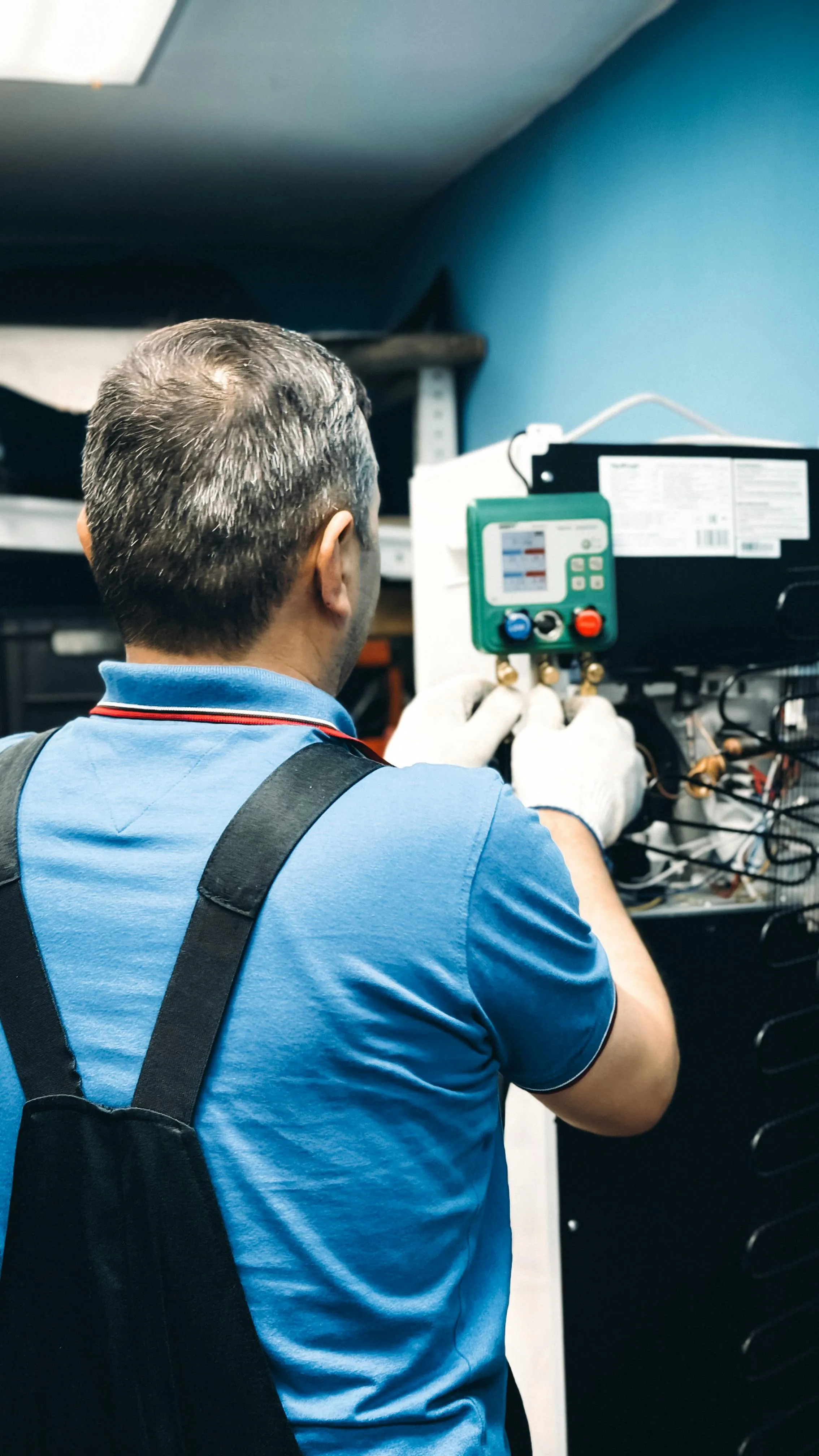
An annual heat pump service is a structured check that verifies your system is operating at the efficiency it was commissioned at, catches small problems before they become big ones, and produces the documentation manufacturer warranties require. The visit takes 90 minutes to 2 hours on a typical Reading installation and is carried out by an MCS-certified engineer.
We coordinate annual servicing through our network of Reading-area installers. The engineer who attends will be MCS-certified, will hold F-Gas certification (legally required to work on the sealed refrigerant circuit), and where possible will be authorised on your specific heat pump brand — commissioning and tuning are brand-specific, and an engineer who knows your equipment will catch issues a generic visit might miss.
The service covers seven discrete items, each documented in the written record you receive after the visit:
-
Performance check vs commissioning baseline
We log the system's current flow temperature, return temperature, and run-time pattern, and compare them against the figures recorded at commissioning. A drift in any of these is the first sign of an efficiency problem — caught early, the cause is usually a refrigerant charge issue or a sensor calibration that's easy to fix; left a year, it can mean a wasted couple of hundred kilowatt-hours per month.
-
Refrigerant pressure check
Refrigerant charge is the single variable that affects SCOP most. We check pressures on both sides of the cycle and compare against the manufacturer specification for current outdoor conditions. A low charge points to a leak (sealed-system heat pumps shouldn't leak, but joints can creep over time) and a high charge usually means a calibration error at commissioning that needs revisiting.
-
Filter cleaning and outdoor coil check
The outdoor coil is exposed to dust, leaves, and in Reading's wetter winters, occasional ice build-up. We clear the coil fins, clean any inline filters in the system, and check the fan for free rotation. A clogged coil is a common cause of efficiency drop — the fan has to work harder, more electricity goes into airflow, less into useful heat.
-
Condensate drain inspection
Air source heat pumps produce condensate — water from the moisture in the air that's been condensed against the cold outdoor coil. The condensate drain has to stay clear, particularly in winter when it can freeze. We check the drain run, the trap if fitted, and any heated drain elements.
-
Controls and weather compensation curve check
The weather compensation curve set at commissioning is the system's most important running-cost setting. We verify it against your current heating use, check the room thermostat calibration, and confirm the hot water schedule still matches your household pattern. If your family schedule has changed (different working hours, kids at school, etc.) since commissioning, we'll suggest curve adjustments.
-
Hot water cylinder and immersion check
We check the hot water cylinder's coil performance, the thermostat, and the backup immersion heater if fitted. Cylinder coil scale is a slow-onset efficiency problem in hard-water areas (Reading has moderately hard water at around 240 mg/l CaCO₃ in most postcodes) — a yearly check catches it before it becomes a recommissioning job.
-
Documentation
After the visit, you receive a written service record including the measured performance figures, any adjustments made, any items flagged for the owner's awareness, and the next service date. The record is also submitted to your manufacturer's warranty registration so the annual-service requirement is satisfied on the record.
When to schedule a heat pump service
The standard advice is once per year, but the most useful framing isn't a fixed date — it's whichever of the following triggers comes first.
-
Annually, before the heating season
The standard recommendation is once per year, ideally in late autumn (October–November in Reading) before the heaviest heating demand begins. Booking before winter means any issues identified are fixed before they affect your comfort, and your installer's schedule has more flex than mid-winter.
-
After any unusual behaviour
Increased running cost, unusual noises, error codes on the controller, longer-than-usual warm-up times, or visible icing on the outdoor unit outside of normal defrost cycles — all warrant a service rather than waiting for the annual slot.
-
After your home's heating use has materially changed
Added an extension, swapped radiators on a major room, switched to a new electricity tariff with different reduced-rate hours, started working from home full-time — any of these can shift your demand profile and benefit from a control-tuning service even if the equipment is fine.
-
Before manufacturer warranty expiry checkpoints
Most manufacturer warranties have 5-, 10-, or 15-year checkpoints that require an annual-service record to extend cover. We schedule pre-warranty-checkpoint services with this in mind.
Cost of heat pump servicing in Reading
Reading homeowners typically pay £100–£200 per annual service. The figure is sourced from the Energy Saving Trust's UK heat pump running-cost guidance, which lists £100–£200 as the standard service-cost range for residential air source heat pump installations.
Your specific quote depends on:
- System size (a 6 kW heat pump is faster to service than a 16 kW system serving a large property)
- Brand and equipment age (older systems and less common brands sometimes require longer diagnostic time)
- Whether the visit catches a fault that needs same-day intervention (parts and additional labour are quoted separately)
- Whether you've taken a maintenance contract that bundles the service with interim visits
For a property-specific quote, request a free quote. We'll route the request to an MCS-certified Reading-area installer with experience on your heat pump brand.
What you should receive after a heat pump service
A heat pump service is not finished until the documentation is in your hands. The paperwork is what protects the warranty, gives you a baseline to compare future services against, and surfaces anything that needs follow-up.
A complete service hand-over for a Reading heat pump should include:
- A written service record dated to the visit, listing every check carried out and the measured value or pass/fail for each. Generic "service completed" stamps without measured figures are a quality red flag — the value of the service is in the numbers, not the signature.
- Measured performance figures — flow temperature on a representative heating cycle, return temperature, refrigerant pressures on both sides of the cycle, weather compensation curve setting, hot water target temperature. These let you (or any future engineer) compare against next year's measurements and spot drift.
- Any adjustments made documented explicitly — if the engineer changed the weather compensation curve, the hot water schedule, or the refrigerant charge, that should be in writing with the before-and-after values. Silent adjustments are a maintenance-trail gap that bites at warranty checkpoints.
- Items flagged for owner awareness — anything that's not a fault now but could become one (e.g., visible coil scale building up, condensate drain showing seasonal stress, hot water cylinder coil performance starting to drift). Flagging these gives you a heads-up before they become callouts.
- Manufacturer warranty registration confirmation — proof that the service record has been submitted against your manufacturer's warranty registration. Most heat pump warranties require evidence of annual service to extend cover at 5- and 10-year checkpoints; the registration submission is what closes the loop.
- Next service due date — typically 12 months from this visit, ideally booked in autumn before peak heating demand. Some installers offer a soft reminder service; if not, diarise it yourself.
If your service didn't include this documentation, ask for it — the engineer's records should support it retroactively. Going forward, request the written record at the time of the visit rather than waiting for it to arrive by email, which is when records get lost.
Common service findings in Reading homes
Most annual services in Reading turn up minor items — a filter that's clogged faster than expected, a weather compensation curve that's drifted off its commissioned setting, a condensate drain that needs clearing. None are alarming; all are easier to fix when caught at the annual checkpoint than when they escalate into a winter fault callout.
The patterns we see most often at Reading annual services:
- Coil fouling on outdoor units sited near deciduous trees — autumn leaves, pollen, and small debris build up on the outdoor coil fins over the year. Reading's mature street trees in Caversham, Earley, and central Reading make this a common finding. Clearing the coil restores airflow and rated efficiency.
- Weather compensation drift — controls that have been changed (sometimes by the homeowner, sometimes by another engineer doing unrelated work) and not reset to the commissioned curve. Returning to the curve typically recovers 5–10% of efficiency lost over the year.
- Condensate drain partial blockage — particularly common after a damp Reading winter where the drain takes silt or moss build-up. Catching it at the annual prevents the freeze-up cycle that puts pressure on the heat pump in subsequent winters.
- Cylinder coil scale build-up — Reading's moderately hard water (around 240 mg/l CaCO₃ in most RG postcodes) drives slow coil scaling. The annual service catches it before it materially affects hot water recovery time.
- Hot water schedule out of sync with household pattern — common after a change in working-from-home pattern, kids starting school, or other household shift. A 10-minute schedule re-tune at the annual service can take £30–£60 a year off running costs.
- Refrigerant pressure drift — small drifts within manufacturer tolerance are normal year-on-year. A larger drift can indicate a slow leak (sealed-system heat pumps shouldn't leak, but joints can creep) — caught at the annual, the leak is repaired before SCOP degrades materially.
None of these are emergency findings — they're the routine maintenance work that an annual service is designed to catch. The advantage of having a Reading-local engineer for the work is recognising the area-specific patterns (tree species, water hardness, prevailing weather) that affect what's commonly found and how it presents.
Heat pump servicing for all major brands
Our Reading-area network services the major UK heat pump brands. Where possible we route to an engineer brand-trained on your equipment, since commissioning, control logic, and fault diagnosis are all brand-specific.
- Daikin (Altherma 3 R, Altherma 3 H HT)
- Mitsubishi Electric (Ecodan range)
- Vaillant (aroTHERM plus, aroTHERM)
- Worcester Bosch (Greenstar heat pump range)
- Grant UK (Aerona³)
- Samsung (EHS Mono, EHS Mono R290)
If your heat pump is from a less common brand not listed above, we can still help — let us know the manufacturer and model when you request a quote.
Reading neighbourhoods we cover
- Heat pump servicing in Caversham →
- Heat pump servicing in Earley →
- Heat pump servicing in Lower Earley →
- Heat pump servicing in Tilehurst →
- Heat pump servicing in Whitley →
- Heat pump servicing in Woodley →
- Heat pump servicing in Reading town centre →
- Heat pump servicing in Thatcham →
View the full Areas page → — surrounding villages and parts of West Berkshire covered case-by-case.
Frequently asked questions
How often should a heat pump be serviced?
Once per year is the standard recommendation, and is typically required to maintain manufacturer warranty cover. Some maintenance contracts include additional interim checks (filter cleaning, condensate inspection) at quarterly intervals — but a full annual service from an MCS-certified engineer is the baseline.
How long does a heat pump service take?
A standard annual service typically takes 90 minutes to 2 hours on site, depending on system size and accessibility. The visit covers performance measurement, refrigerant pressure, filter and coil cleaning, condensate drain inspection, controls check, and written documentation. Visits that surface a fault may extend if the engineer can diagnose and resolve it the same day.
What does a heat pump service include?
An annual heat pump service includes: a performance check against the commissioning baseline, refrigerant pressure measurement, outdoor coil cleaning, filter cleaning, condensate drain inspection, controls and weather compensation curve check, hot water cylinder and immersion check, and a written service record. The exact scope is set by the MCS service standard and the manufacturer's service schedule for your specific equipment.
How much does a heat pump service cost in Reading?
Reading homeowners typically pay £100–£200 per annual service. Your quote depends on system size, brand, and any specific items flagged at the last service or commissioning. Maintenance contracts that bundle multiple visits per year are also available — see our maintenance page for details. For an accurate figure for your system, request a free quote.
Will an annual service affect my manufacturer warranty?
Yes — in a good way. Most heat pump manufacturer warranties require an annual service from an MCS-certified engineer to maintain validity. The service record is submitted to the manufacturer's warranty registration so that the annual-service requirement is documented. Missing an annual service is one of the most common causes of warranty disputes, so the service is a meaningful protection of the equipment's commercial cover.
Can I service the heat pump myself?
No — and we don't recommend trying. Heat pumps are sealed refrigeration systems; opening the refrigerant circuit requires F-Gas certification (a legal requirement under EU/UK regulations) and specialist equipment. Most manufacturer warranties also void on unauthorised intervention. Owner-side maintenance is limited to keeping the area around the outdoor unit clear of leaves, snow, and debris.
What are the signs my heat pump needs servicing?
Common signs that a service is due (or overdue): rising electricity bills without an obvious change in heating use, longer warm-up times than you used to see, unusual noises from the outdoor unit (clicking, grinding, prolonged fan running), error codes on the controller, visible icing on the outdoor unit outside of normal defrost cycles, or hot water that takes longer to recover after a high-demand period. Any of these warrants a service rather than waiting for the annual slot.
Do you service all heat pump brands?
Our Reading-area installer network services all major UK heat pump brands — Daikin, Mitsubishi Electric, Vaillant, Worcester Bosch, Grant UK, and Samsung — plus most smaller brands available in the UK market. We route service requests to an installer with brand-specific training where possible, since heat pump commissioning and tuning is brand-specific.
Will the service include software/firmware updates?
Where the manufacturer publishes firmware updates for the controller or the outdoor unit, our engineers apply them as part of the service. Most modern heat pumps are running firmware that affects efficiency (weather compensation behaviour, defrost-cycle frequency, hot water priority logic) — staying current matters. We document any firmware updates applied in the service record.
Can I get a maintenance contract instead of paying per-visit?
Yes — maintenance contracts that bundle the annual service plus interim visits (typically quarterly) plus priority response on faults are available. They tend to suit Reading homeowners who want predictable upkeep and a contracted point of contact rather than booking ad-hoc. See our maintenance page for what's covered and how contracts compare to per-visit pricing.
Book a heat pump service in Reading
Submit the form on the homepage and we'll respond within 24 hours. We'll route your request to a Reading-area MCS-certified engineer trained on your heat pump brand and within easy reach of your postcode.