Heat pump defrost cycles — why your heat pump isn't broken when it stops in winter
Last reviewed: 14 May 2026
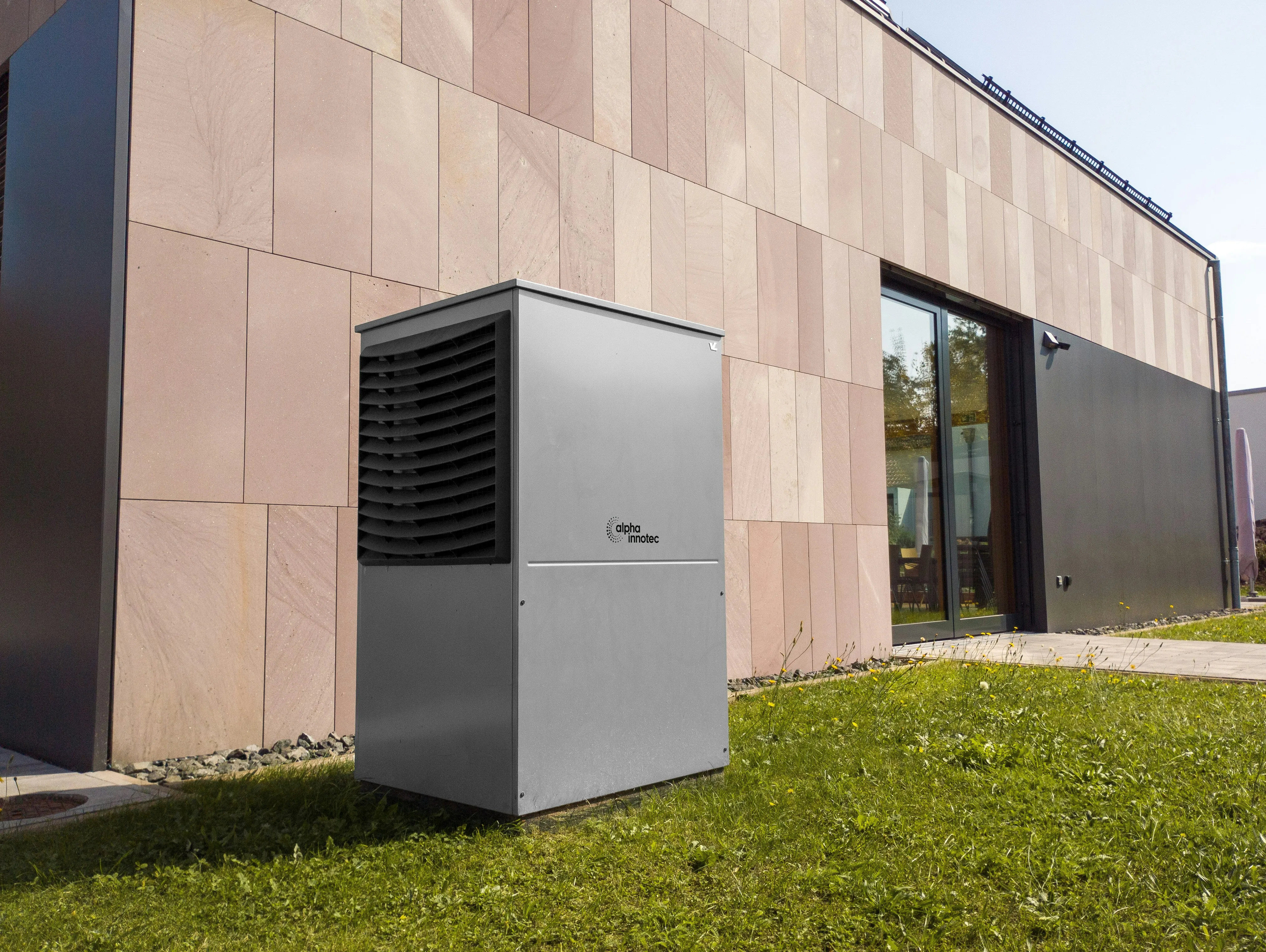
Every air source heat pump runs defrost cycles in cold and damp weather. The outdoor unit goes quiet, visible vapour rises from it, and the radiators feel a little cooler for 10–15 minutes. This guide explains what's happening, why it's normal, and the fault patterns that genuinely warrant a service call.
Last reviewed: 14 May 2026
In short
A defrost cycle is a normal, designed-in operating behaviour of every air source heat pump. In cold-and-damp weather — most of UK winter — frost forms on the outdoor coil, and the unit briefly reverses its refrigerant flow to melt the ice off. The cycle typically lasts 5–15 minutes, occurs every 30 minutes to 2 hours depending on the weather, and is fully accounted for in the unit’s published SCOP rating.
During defrost: the outdoor fan goes quiet, visible vapour rises from the unit (often misread as smoke — it’s water vapour from melting ice), and the indoor radiators run slightly cooler for 10–15 minutes while heat is being directed outward to clear the coil. Room temperatures typically drop by less than half a degree in a well-insulated home, thanks to the building’s thermal mass holding the heat.
The counter-intuitive bit: defrost cycles are more frequent at +3°C than at -10°C, because cold air carries less moisture than cool damp air. UK winter — wet and mild — produces more defrost activity than continental dry-cold winters.
The fault signals to watch for: defrost every 5–10 minutes, ice remaining visible after a cycle completes, defrost happening in summer, meltwater freezing around the unit, or the unit getting stuck in defrost mode for more than 15 minutes. These warrant a service technician call. Normal defrost behaviour does not.
Table of contents
- Why defrost cycles happen — the physics
- How defrost works — what the heat pump actually does
- How often does defrost happen in UK winter?
- What you see and hear during a defrost cycle
- Five fault signals that aren’t normal defrost
- Why your radiators feel cooler after defrost
- What defrost tells you about heat pump performance
- The Scandinavia counter-intuition
- What this means for homes in Reading
- Three checks for normal vs faulty defrost behaviour
Why defrost cycles happen — the physics
Your heat pump extracts heat from outdoor air using an outdoor coil — a refrigerant-filled metal coil over which a fan draws ambient air. As warm air passes over the cold refrigerant, heat transfers from the air to the refrigerant.
In cold and damp conditions, the coil surface is significantly colder than the surrounding air — typically -5°C to -15°C while ambient air might be 0°C to +5°C. Moisture in the air condenses onto the cold coil — exactly like condensation forming on a cold drink glass on a humid day. When the coil is below 0°C, that condensate freezes and forms a frost layer.
Three problems with frost on the coil:
- The ice insulates the coil from the airstream — heat absorption drops
- The ice physically blocks airflow between the coil fins — fan power consumption rises
- The ice eventually reaches a saturation point beyond which the unit can’t continue extracting heat efficiently
So the coil has to be cleared. The mechanism is the defrost cycle.
The counter-intuitive bit: defrost is most frequent at 0°C to +5°C with high humidity — typical UK winter conditions. At lower temperatures (e.g. -10°C), the absolute moisture content of cold air is much lower, so less ice forms. UK winters — damp, mild — produce more defrost activity than continental winters at much lower temperatures.
How defrost works — what the heat pump actually does
Modern heat pumps clear ice by reversing the refrigerant flow:
- The unit’s 4-way reversing valve switches the direction of refrigerant circulation
- The outdoor coil now acts as a heat emitter instead of a heat absorber
- Hot refrigerant from the compressor flows directly through the outdoor coil — the coil temperature rises to +20°C to +40°C in seconds
- The ice melts in 5–15 minutes depending on how thick it had become
- The reversing valve switches back, and normal heating resumes
During defrost:
- The outdoor fan typically stops — running it would blow away the heat melting the ice
- The compressor continues running — drawing electricity to drive the cycle
- The indoor heating temporarily pauses — heat is being sent outward to melt ice, not inward to the radiators
- The circulating pump may continue running to prevent any cold-spot freezing inside the property
Where does the heat for defrost come from? From the indoor heating system. The defrost cycle is essentially borrowing a small amount of heat from indoors (drawing thermal energy from the cylinder water or radiator-return water) and pushing it outdoors to melt the coil ice. This is why the radiators feel briefly cooler after a defrost cycle — flow temperature drops by 5–10°C while the cycle runs, and recovers over the following 10–15 minutes.
Energy cost: defrost uses 3–10% of total winter heating energy, depending on the unit, the siting, and the local microclimate. This is already built into the unit’s published SCOP rating — defrost cycles aren’t a hidden cost, they’re a designed-in part of cold-weather operation that the seasonal efficiency figure reflects.
How often does defrost happen in UK winter?
Defrost frequency varies dramatically with conditions. Approximate guide for UK winter:
| Conditions | Defrost frequency | Duration |
|---|---|---|
| 5°C, RH 70%, dry | Every 2–4 hours | 5–10 min |
| 3°C, RH 85%, light rain | Every 60–90 min | 8–12 min |
| 0°C, RH 90%, freezing fog | Every 30–45 min | 10–15 min |
| -5°C, RH 70%, snow | Every 60 min | 8–12 min |
| -10°C, RH 60%, dry cold | Every 2–3 hours | 5–10 min |
The trigger is humidity, not just temperature. Modern heat pumps use demand-based defrost — sensors detect when ice is actually forming, rather than running on a fixed schedule. Older units use timed defrost cycles regardless of conditions, which is less efficient.
Some high-end units now incorporate weather-feed integration (using internet weather data to anticipate icing) and tariff integration (timing optional cycles into cheaper-rate windows). These features make modest differences in marginal conditions but don’t change the fundamental physics.
What you see and hear during a defrost cycle
During defrost, the homeowner typically observes:
- Visible vapour or “steam” rising from the outdoor unit — this is meltwater evaporating from the warm coil. It’s the most commonly-misread heat pump signal. Homeowners regularly mistake it for smoke or a fault. It’s water vapour, exactly like the steam off a cup of tea or off wet ground on a frosty morning.
- The outdoor unit goes quieter — fan typically off; compressor continues but without the fan noise the unit sounds significantly quieter than during normal heating
- The radiators run cooler briefly — flow temperature drops 5–10°C for 10–15 minutes, and the radiators feel noticeably less hot
- No heat from the heat pump for 10–15 minutes — but in a well-insulated home, room temperatures typically drop only 0.2–0.5°C over this period because the building’s thermal mass holds the heat
- Meltwater dripping from the unit — the water needs to drain. A well-designed install includes a drainage tray or sloped base to direct it away from the unit
- A faint click from the outdoor unit at the start and end of the cycle — this is the 4-way reversing valve switching positions
What you should NOT see during normal defrost:
- Loud banging from the unit
- Defrost cycles happening every 5–10 minutes
- Ice still visibly accumulating after a cycle has finished
- Indoor temperature dropping more than 1°C during the cycle
- The unit staying in defrost mode for more than 15 minutes
Five fault signals that aren’t normal defrost
If you observe any of these patterns, call your installer or service provider:
1. Defrost cycles every 10–20 minutes. Either the icing sensors are over-reading (calibration issue), or the unit is icing up faster than expected — often a siting issue (unit too close to a wall, airflow recirculation problem) or installer-error from setup.
2. Failed defrost — ice remains after the cycle. The cycle completes but visible ice is still on the coil. Suggests insufficient cycle duration (logic fault) or compressor cannot generate enough hot refrigerant (compressor degradation or refrigerant undercharge).
3. Defrost happening in non-icing conditions. Defrost in summer, in very dry-cold conditions (-15°C and dry), or in mild damp conditions where icing wouldn’t form. Suggests sensor calibration drift or controls fault.
4. Meltwater freezing around the unit. In severe cold (below -5°C), meltwater can freeze in the drain line or under the unit. Modern installs include drain heater or sloped drainage; older installs may need retrofit. Safety matters — ice buildup near the unit creates slip hazards — and unit longevity matters too, as ice can damage the coil base if it accumulates.
5. Unit stuck in defrost mode. Compressor running, fan off, outdoor coil heating, indoor radiators cooling — for more than 15 minutes continuously. Suggests reversing valve fault or controls fault. Manual reset by your installer or a service call is needed.
Distinguishing these from normal defrost behaviour is part of the homeowner-vetting work. The patterns above are genuine fault signals; the patterns in the previous section are normal operation.
Why your radiators feel cooler after defrost
A homeowner often notices that the radiators are slightly cool to the touch for 10–15 minutes after a defrost cycle completes. This is normal:
- During defrost, the indoor heat exchanger gave up some of its heat to the outdoor coil
- When normal heating resumes, the indoor circuit’s water has briefly cooled
- The compressor and heat exchanger restart full heating mode, but it takes 10–15 minutes for the flow temperature to recover to the design setpoint
- During recovery, the radiators run at slightly lower flow temperature — they’re still emitting heat, but less than usual
If this period bothers you, two design adjustments help:
- Larger radiators with more thermal mass smooth out the temperature recovery
- Better insulation reduces sensitivity to short heating pauses (the temperature drop during defrost in a well-insulated home is usually imperceptible)
- Underfloor heating has substantial thermal mass and is largely immune to the brief defrost-recovery period
If room temperatures noticeably drop during defrost (more than 1°C), the underlying issue is usually insufficient radiator output or insufficient insulation — not the defrost cycle itself.
What defrost tells you about heat pump performance
Defrost behaviour is one of the gaps between design SCOP (the laboratory rating at standard test conditions) and real-world SCOP at your specific property. Three factors determine how big that gap is:
1. Local microclimate. A property in a damp microclimate (riverside, low-lying valley, foggy area) will see more defrost cycles than a property in a drier microclimate (elevated, well-drained, less humid). Same heat pump, same outdoor temperature reading, different annual defrost time.
2. Siting quality. A unit sited in a damp corner with poor airflow accumulates more ice than the same unit in an open, well-drained position. Siting is part of design discipline — see our guide on where to site your outdoor unit.
3. Unit defrost logic quality. Modern demand-based defrost is significantly more efficient than older timed defrost. Choosing a unit with high-quality defrost logic improves real-world SCOP — and is one of the under-discussed factors when comparing heat pump models.
A heat pump well-sited, with modern demand-based defrost, in a property with adequate insulation, typically loses 3–5% of winter heating energy to defrost cycles. The same heat pump in poor siting + older logic + cold-damp microclimate may lose 8–12%. Over a 15-year asset life, the difference matters.
The Scandinavia counter-intuition
Nordic countries operate millions of heat pumps in conditions substantially colder than UK winter — Norwegian properties regularly run heat pumps at -15°C to -25°C ambient. The cold-weather performance evidence from these markets shows that dry cold reduces defrost frequency, often substantially.
Norwegian heat pumps in -10°C dry conditions run defrost cycles at lower frequency than UK heat pumps in 0°C wet conditions — because the moisture content of -10°C air is far lower than 0°C air. Less moisture means less ice means less defrost.
The implication: defrost frequency is driven by air humidity at the coil, not by absolute temperature alone. UK winter humidity is high (typically 75–95% RH); UK winter defrost is therefore relatively frequent compared to colder-but-drier climates. This is normal physics, not a UK-specific heat pump weakness. See our guide on heat pumps in cold weather for the broader cold-weather evidence.
What this means for homes in Reading
Reading sits in the Thames Valley — a moderately humid microclimate with mild-but-damp winter conditions. Typical Reading winter is 0°C to +6°C with 80–95% relative humidity — exactly the conditions in which defrost cycles occur most frequently.
This affects how a Reading homeowner reads heat pump defrost behaviour:
- Defrost cycles will happen often in Reading winter. Expect cycles every 60–120 minutes during a damp December or January day. This is normal Reading-climate operation.
- Properties near the Thames or Kennet (riverside Caversham, riverside central Reading, lower Caversham near the meadows) see slightly higher humidity than properties further from the watercourses. Defrost frequency may be marginally higher in these locations.
- Properties on higher ground (parts of Tilehurst, Earley, Whitley) sometimes see less defrost activity because of slightly drier microclimates — but the difference is modest.
- Snow and freezing-fog events (uncommon but not rare in Reading winter) accelerate defrost frequency for a 24–48-hour period. This is normal.
For Victorian and Edwardian terraces in central Reading and lower Caversham, the building’s thermal mass usually masks the brief radiator temperature drop during defrost. Solid brick walls hold heat well and the room temperature drop during a 12-minute defrost cycle is typically imperceptible.
For inter-war semis in Tilehurst, Earley, and Whitley and 1960s–80s estates in Lower Earley and Woodley, the cavity-wall thermal mass is less but adequate. Modern double glazing and insulation upgrades smooth out defrost-related temperature variation effectively.
For modern post-2000 estates on the western expansion, high insulation standards mean defrost has negligible impact on indoor temperature comfort.
If you observe visible vapour from your outdoor unit during a Reading winter morning, that’s almost certainly a defrost cycle — not a fault. Reach for a service call only if you observe one of the five fault signals above.
Three checks for normal vs faulty defrost behaviour
Three quick checks tell you whether what you’re observing is normal defrost or an actual fault:
-
How long does the cycle last? Normal defrost: 5–15 minutes. Beyond 15 minutes continuously = fault signal. Time it with a stopwatch if uncertain.
-
How often does the cycle occur? Normal: every 30 minutes to several hours, varying with weather. Cycles every 10–20 minutes regardless of conditions = fault signal. Track the pattern across a few hours.
-
Does the ice clear after the cycle? Normal: outdoor coil is visibly ice-free after cycle completes. Ice remaining or building up = fault signal. Visual inspection after cycle ends.
If all three checks return normal, your defrost behaviour is normal operation — even if you’re seeing visible vapour and your radiators feel briefly cool. If any of the three checks returns abnormal, log the pattern and contact your installer or service provider.
Related guides
- Do heat pumps work in cold weather? The Scandinavia evidence — the broader cold-weather counter-myth deep-dive
- How does an air source heat pump work? — the refrigerant cycle foundation this article deepens
- SCOP, COP and HSPF explained — the efficiency rating that accounts for defrost
- Where to site your outdoor heat pump unit — the siting decisions that affect defrost frequency
Get a quote — properly-sited install with modern demand-based defrost logic and full annual SCOP modelling for your property.
Call us on 0118 [number] | Email [address]
See what a heat pump would look like in your Reading home
The mechanism is the same in every UK home; the design is specific to yours. Our team carries out a free in-home survey including a full room-by-room heat-loss calculation, identifies the system size and configuration that fits your property, and provides a written quote with the £7,500 BUS grant already deducted.
You'll see the actual figure you'd pay — not an estimate — and the projected efficiency for your specific install.